
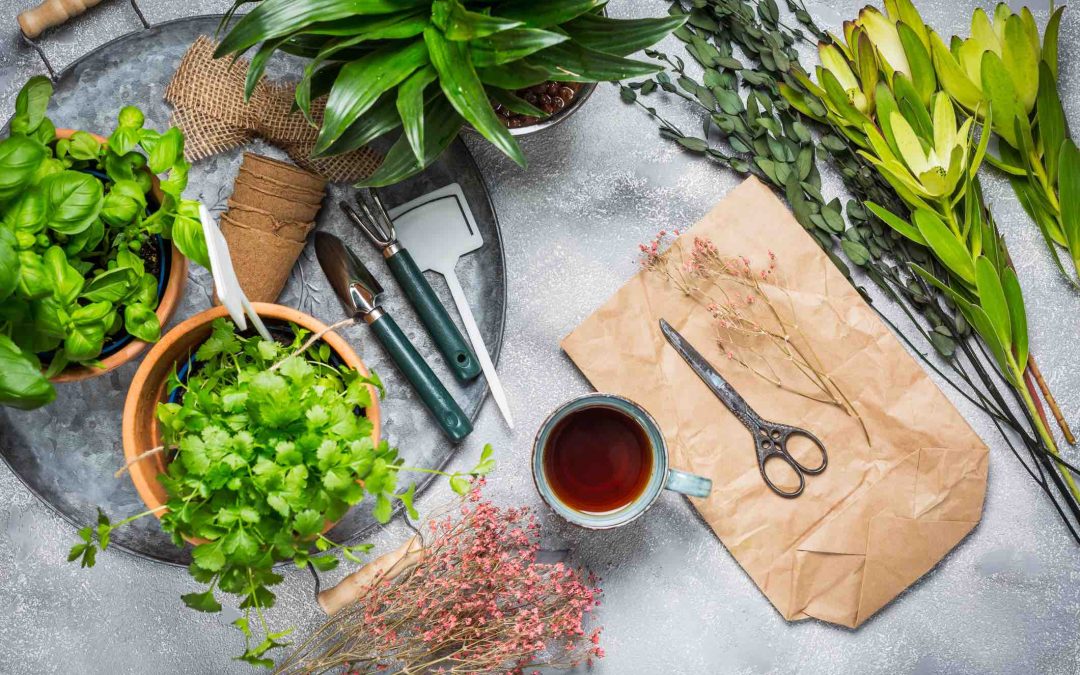
In the good old summertime in Mississippi, garden produce is abundant. Whether you grow your own vegetables or purchase produce from local farmers, the bounty of the season calls for a few garden herbs. A little fresh basil enhances the flavor of tomatoes; all of those cucumbers and okra that you plan to pickle require more than just a gracious plenty of dill; the chicken salad needs a touch of parsley for garnish; and every glass of iced tea needs a sprig of mint. And, so, you need an herb garden.
Where to Plant Herbs
Herbs can be planted in existing flower beds, mixed with other annuals and perennials, or they can be planted in raised beds and containers designated just for herbs. Herbs are hardy plants and adapt well to many locales. However, I suggest herbs be accessible and close to the kitchen. It is so commodious to have herbs handy when cooking. I suggest keeping a large pot of frequently used herbs nearby for easy harvesting.
How to Plant
Most herbs require six to eight hours of sunlight, except for cilantro, mint, and parsley, which can tolerate part shade. Like most plants, herbs prefer well-drained soil, and if planted in containers, terra cotta pots, because they dry out faster, are best for herbs. Also, it is important to harvest herbs frequently before they flower. So remember to add fresh oregano to the spaghetti and fragrant, pungent thyme to the roast chicken, and add some basil leaves to the tomato pie you promised to make.
Favorite Garden Herbs
Mint
A garden and a cook need mint. This herb is fragrant and flavorful, and it is a Southern tradition. However, it is best to plant mint in containers because, as lovely as it is, it can be invasive in the garden. There are several varieties of mint to choose from, and you may want more than one kind. Use mint in tea, fruit salads, and to garnish desserts. Mint is a perennial and will obligingly come back the following year. Remember to keep mint watered and harvest your mint regularly.
Parsley
When it comes to garnishes, parsley is the sine qua non of herb plants, and not only does it look pretty on a plate, with its vitamin C and other healthy traits, it is also good for you, so be sure to eat your garnish. The two most common types of parsley are curly and flat-leafed or Italian parsley, which is more pungent and an excellent herb for Italian cuisine. Parsley can be planted in flower beds or pots, and it is pretty in window boxes. Like mint, parsley can tolerate a little shade. It likes rich soil and is one herb that relishes water.
As a word of caution or delight, parsley is a host plant for the Eastern Black Swallowtail butterfly, so you may go out to the garden and find caterpillars devouring your parsley. If this happens, you may have to purchase parsley from the grocery. This is another reason to plant a lot of parsley, especially if you want to attract butterflies. Be sure to share this miracle of nature with a child. Watch the caterpillars spin their chrysalises, do their walkabout, and later emerge as beautiful butterflies.
Dill
Dill is used primarily for pickling and in soups and stews. Even though it looks somewhat like a weed, when the cucumbers and okra are abundant and need to be pickled, dill is much in demand and appreciated.
Dill likes full sun and well-drained soil. This herb is easily grown from seed, but plants can be purchased from local garden centers, and this is usually convenient when timing is important. As with parsley, the caterpillars of the Eastern Black Swallowtail Butterfly may find this herb to be tasty. Be prepared. My suggestion is to plant a lot of dill—some for the pickles and some for the butterflies.
Rosemary
Rosemary is an herb that has an almost pine-scented fragrance, and it is very lovely. Fortunately, this herb is low maintenance. It will tolerate poor soil but will perform better in good dirt, and it is very drought and heat tolerant. Do not plant rosemary in the shade, and plant away from trees. Rosemary is best purchased from a garden center but can be grown from seed if one is very patient and young. This aromatic herb adds a unique flavor to many culinary dishes, and it also is a practical perennial herb that will not wilt on a dry, hot summer’s day.
I think rosemary performs best in terra cotta or clay containers. This is one herb that chefs use with regularity, so keep it handy. Remember to plant rosemary. As Ophelia said in Shakespeare’s Hamlet, “Rosemary is for remembrance.”
Thyme
Thyme is a perennial that thrives in full sunlight, and if you forget to water, thyme is most forgiving. Like so many of our herbs of Mediterranean origins, it does not like wet feet. The tiny, tubular flowers attract bees and other pollinators, and they can be harvested almost year-round. Thyme is a perfect herb for window boxes.
Lavender
Some herbs, such as lavender, are usually planted for their fragrance and are primarily used in oils, soaps, sachets, and bouquets. Lavender thrives in full sun and prefers a dry environment, and it is best not to fertilize or overwater. This herb can be grown from seed, but if you want to enjoy the beautiful lavender flowers this season, it is best to purchase plants. There are many different types of lavender, and it is recommended that one should read the labels before purchasing. All the varieties of lavender are lovely and reminiscent of the year you went to Provence in France, or if you missed the boat, lavender will inspire you to go there. Fields of fragrant, purple-hued flowers swaying in the breeze will tempt many a gardener to buy a plethora of lavender.
Herbs have been around for a long time. There are Biblical references to these plants that were used medicinally and in rituals, and there is that beloved folk song, “Scarborough Fair,” from merry old England that lauds parsley, sage, rosemary, and thyme. And in Mississippi, with its rural heritage, herbs were and are an integral part of the garden.
Nowadays, celebrity chefs and herbalists have reawakened our interest in cooking with herbs and incorporating herbs into our gardens. And it is okay if you do not get the pickles made today, or the pesto made, or the tomatoes canned. Sometimes it is okay to just sit on your patio on a summer’s day with a glass of iced tea adorned with a sprig of mint and watch your lovely herbs grow. A garden, especially an herb garden, is a summer’s blessing.