From the moment a visitor passes through the iron gates and down the long driveway lined by trees dripping with moss, it’s obvious that there’s something special about the place now known as Field & Forest. Angel Roberts and her husband Robert VanNewkirk sensed the appeal of the 170-acre property and its nearly 200-year-old home right away, and it was enough to inspire them to uproot their own lives and move here with a vision of sharing it with others.
It didn’t hurt that this estate in the small community of Church Hill near Natchez lies adjacent to the home of Angel’s best friend of three decades, filmmaker Tate Taylor. Taylor—whose Hollywood resume includes directing the Oscar-winning film version of The Help—had purchased his own home, another pre-Civil War property called Wyolah, several years earlier. He decamped from Los Angeles in search of a more peaceful existence, and he made it a mission to host friends from the big city as often as possible.
“We had been visiting Tate here and we just fell in love with it, too,” says Robert. “And then this house came up for sale and we just couldn’t pass it up.”
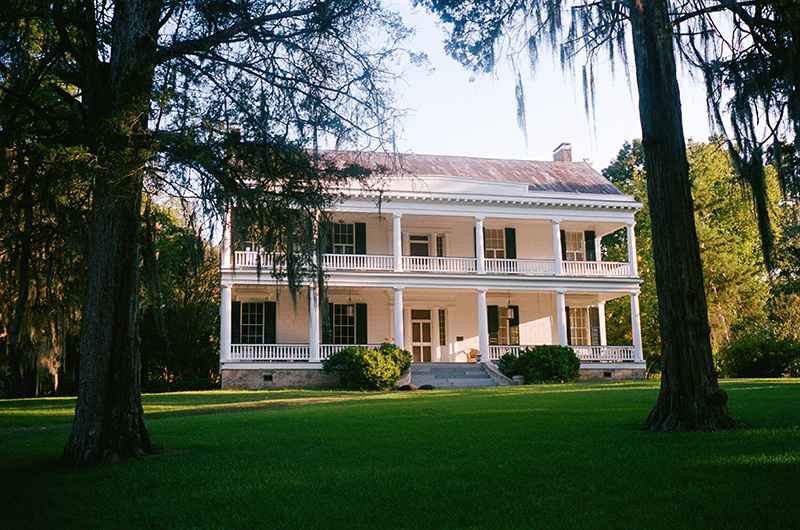
Previously known as the Cedars, or Cedar Grove Place, the home has been inhabited at varying times by a wealthy planter, by a children’s book author, by a group of Hare Krishnas, and, yes, by perpetually tan movie star George Hamilton, who owned the place in the 1970s and early 1980s. It was during Hamilton’s tenure as owner that the home was added to the National Register of Historic Places; in the nomination documents, state architectural historian Jack Gold noted that the structure “provides an explicit representation of the stylistic evolution that occurred in Mississippi between 1820 and 1860” and that it “attests to the increasing prosperity of the Church Hill area in the period before the Civil War.”
When first built in 1830, this was a simple one-story farmhouse, with two rooms on each side of a wide central hall, but piece by piece the place grew, first with a wrap-around gallery porch and then with a Greek Revival-style two-story section that became the new front of the house. Many of the distinctive architectural details from both the original 1830 structure and the mid-1800s addition remain today.
And that was part of what drew Angel and Robert here. Angel—a North Carolina native with a background as a costume designer for “That 70s Show,” an interior decorator, and a dance studio owner—and Robert—who grew up in Nebraska and has worn the hats of production designer, actor, fitness coach, and business owner—both had an appreciation for a place with a true sense of community and connection. Prior to moving to Mississippi, the couple had resided in Los Angeles and then in Charleston, but the more they visited Church Hill, they more they realized this hidden gem had to be their next home.
“This structure was made at a particular moment in time but has had such a crazy history over the years,” Robert says. “The chapters in the story of this house are so diverse, and we just wanted to add something really fun for our chapter.”
Their vision was to create a place that could be used in multiple ways, from a retreat space to a whole-home rental to an event venue. “This is such a perfect house for a wedding,” Angel says. “It’s great for family retreats. It’s great for so many things.”
Angel and Robert jumped into the task of restoring and renovating the 10,000-square-foot historic building without falling into the trap of making it a museum of a bygone time. “You don’t have to hit people over the head with the fact that it’s a Greek Revival antebellum home,” Robert says. “It’s so obvious—it has all the features of that. But we’re living now, and we wanted people who are living now to enjoy it and to feel comfortable here.”
Having renovated some 20 other buildings over the years, Robert says he has developed a specific approach to tackling such a project. “I always demo first, just to see what’s there,” he says. “The space just kind of tells you what it needs.”
In this kitchen, for example, there was a double-sided fireplace with another room on the other side, but both rooms were small. Robert tore out walls and exposed the fireplace’s original brick, which had been hidden. That’s when he and Angel decided to open the entire space as a large kitchen with a central fireplace and with cooking and prep areas on either side—perfect for hosting and entertaining large groups. “It was such an obvious solution once we saw what was there,” he says. “We just had to spend time in the space in order to connect to what’s important for a house like this with so much character.”
Another major focus of the renovation process was on how the house would flow for entertaining. “We took out so many doors and made so many cased openings, just so people could easily walk from room to room,” Robert says.
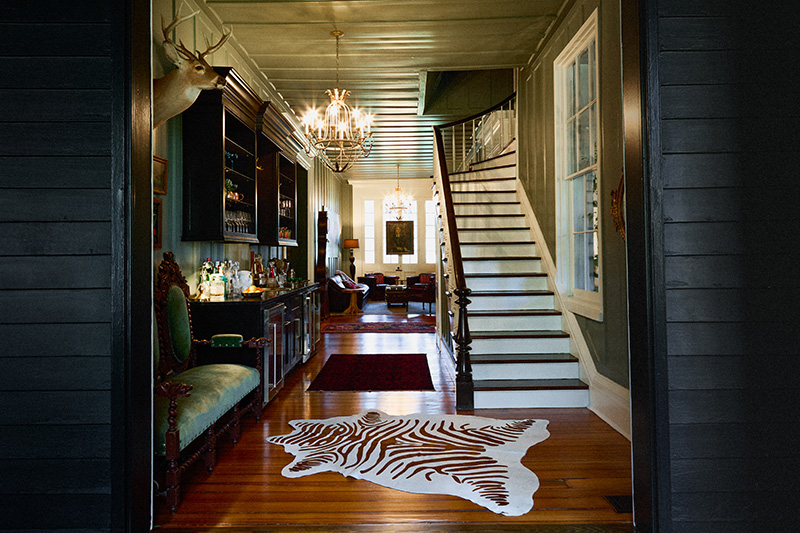
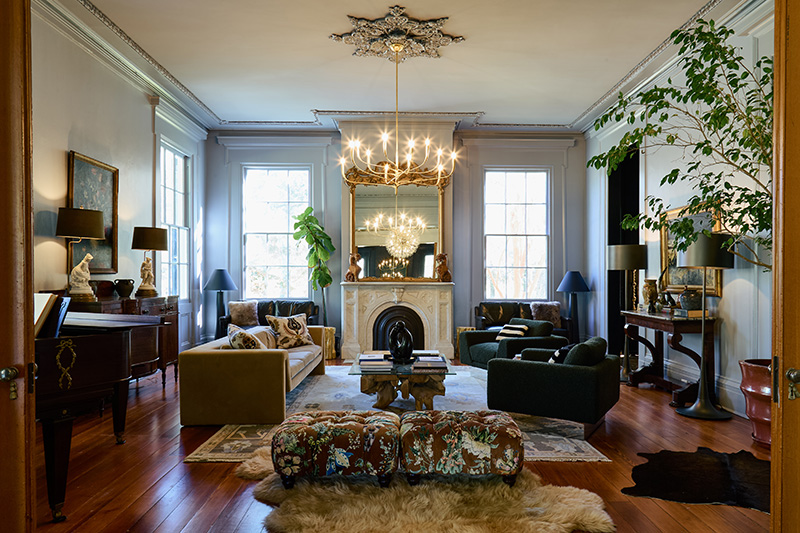
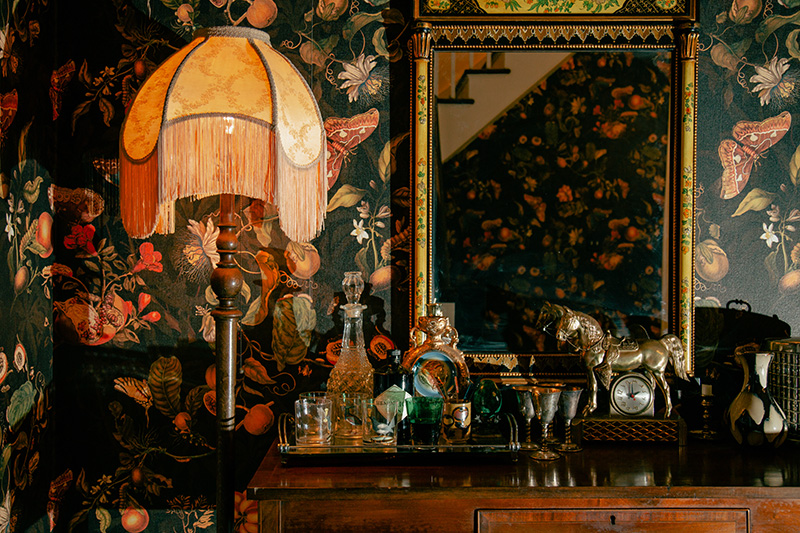
Layered upon the rich architectural elements and Robert’s restored spaces, Angel conceptualized an interior atmosphere with deep colors and a mix of modern comforts and eclectic details. “We were inspired by some of the boutique hotels in New Orleans, but I also kind of let the house speak to me and tell me what it wanted to be,” Angel says. “We started out with some lighter colors in the beginning, but then we realized that the house could handle these dark, bold, rich colors without feeling dreary.”
The couple embarked on a shopping trip that stretched from Michigan down to Mississippi to find unique items to fill each room, but they reserved plenty of space for antiques and furnishings purchased locally. “We wanted pieces that had some sort of a story,” Angel explains. “A lot of the antiques that we got really set the tone for the rooms. But we also wanted people to be able to kick their shoes off, throw on a fur blanket, and sip a cocktail.”
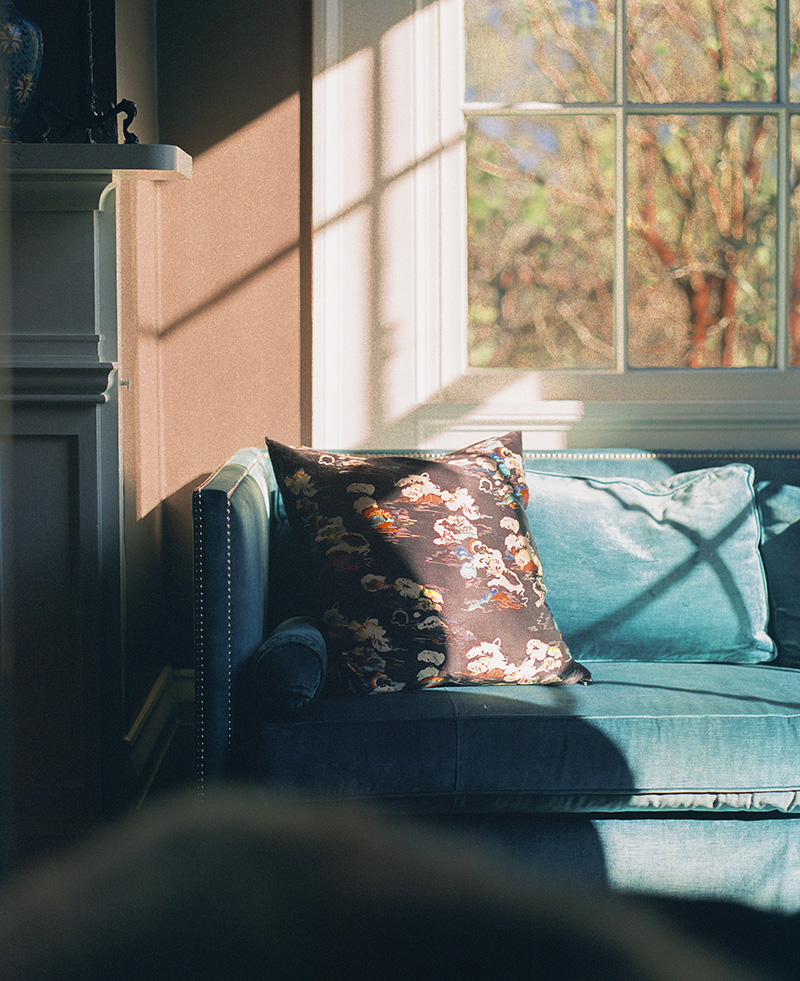
To provide that sense of comfort, Angel was careful to incorporate multiple seating areas within each space. “I wanted every little area to be inviting, to really draw you to it,” she says. “I put all kinds of little surprises everywhere.”
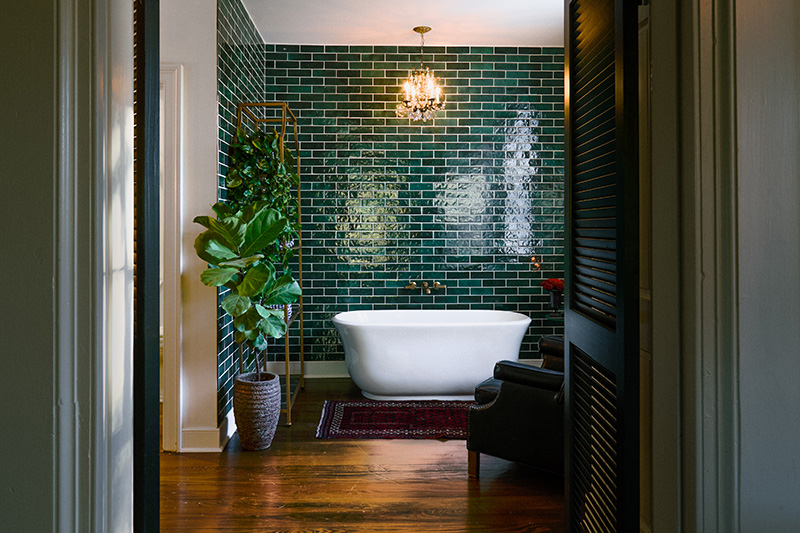
Though the house is large, it has only six bedrooms, giving every guest plenty of space to settle in. Each guest room is a true suite, and the bathrooms feature standalone tubs and walls covered in old European-style tiles. “We really wanted to go all out on our bathrooms and make each one feel like a spa and just be really, really special,” Angel says. “Every bathroom has beautiful seating in it and is just really luxurious.”
The third floor was home to one of the biggest transformations, as it previously had low ceilings and “one really crummy bathroom and a weird hot tub,” Robert says. “So we did completely re-engineer the structure of the house there, raising the ceiling by 3½ feet.”
In order to do so, they removed oak and cypress collar ties that had been hidden within the roof area, and those wood pieces were used to create a new dining table—one of many instances in which architectural pieces unearthed during the renovation were repurposed elsewhere in the house.
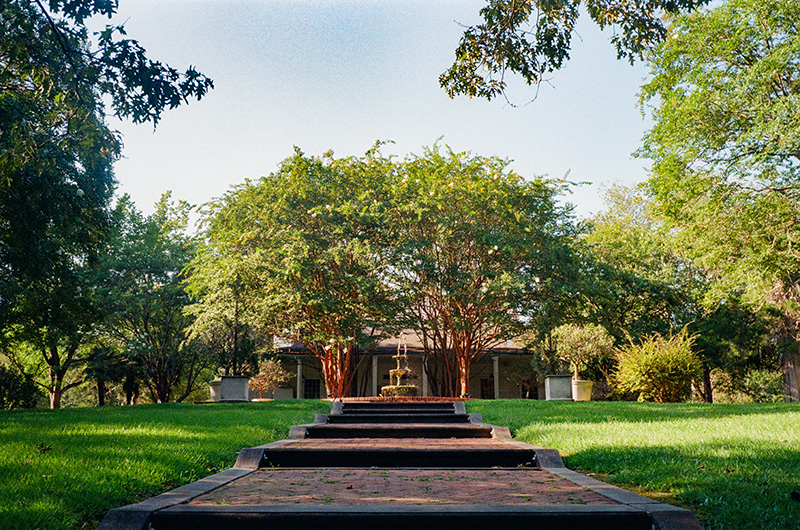
Outside, the namesake fields and forests provide their own respite for guests. Secluded walking trails thread throughout the property, meandering under old shade trees, past two fishing ponds, and through wildflower meadows. An infinity pool is set into the lawn beside a pool house with its own private bedroom suite, and nearby is a wooden barrel sauna.
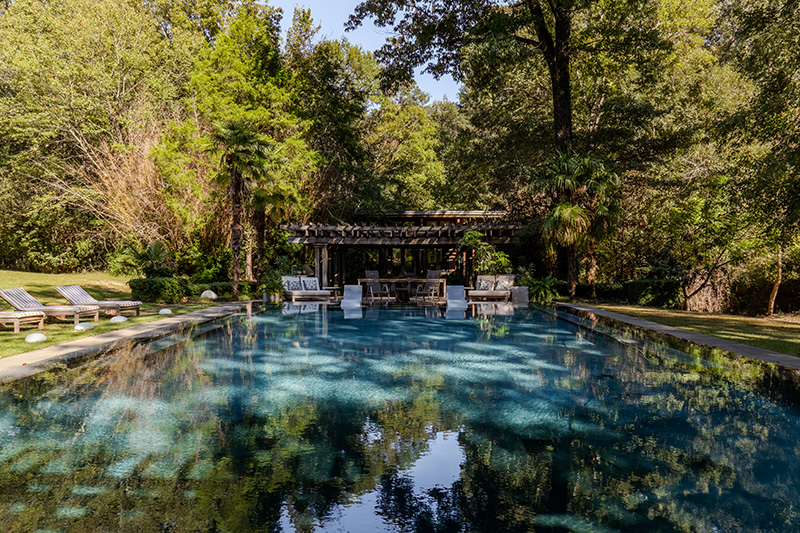
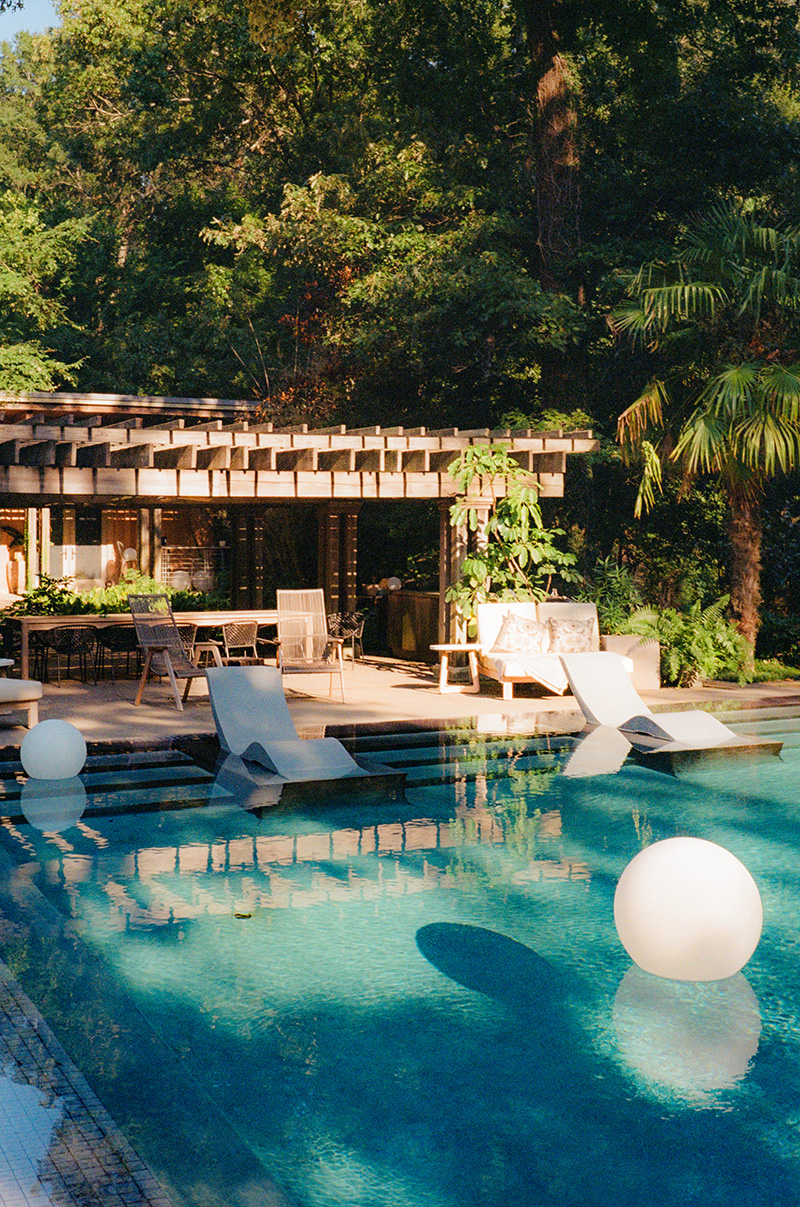
“I literally pinch myself every single day when I walk out and see these beautiful grounds,” Robert says. “It’s just so gorgeous and peaceful.”
After an 18-month renovation process, the couple now regularly welcomes groups who rent the home or host weddings and other events here. But they’re already planning their next phase, during which they would build several smaller cabins around the property and allow larger groups to take advantage of this unique environment. They are also preparing to embark on a barn renovation and plan to create a space there where musicians could set up camp for extended periods of time to write and record music. After all, Nashville to Natchez is an easy drive down the Trace.
Meanwhile, the couple has spread their roots even further into this community by becoming partners with Tate Taylor in Church Hill Variety, a nearby country store and restaurant serving up classic Southern comfort food and doubling as a hangout for locals. It’s another piece of the puzzle for these entrepreneurs, providing an additional event space and dining destination for guests of Field & Forest.
“When we became empty-nesters and were looking for new challenges, the real draw here was that community piece,” Robert says. “We have a tight group of friends here, and we’ve gotten to know families who have been here for years and years. Living in the country and being able to depend on each other and help each other is awesome. Without the people, this is just another house.”