
THE WEATHER OUTSIDE MAY BE FRIGHTFUL, AND THE FIRE MAY BE DELIGHTFUL, but do not get too comfortable. In spite of the plummeting temperature, the garden still beckons. Yes, gardening is a year- round endeavor, and even such notable garden writers as Elizabeth Lawrence and Rosemary Verey have written books about gardens in winter. Alas, no rest for the weary!
Living in Mississippi, our winters can be cold but are mercifully brief. But even in bleak mid-winter, there are flowers that defy the cold, seem oblivious to ice and snow, and bravely poke their heads above ground. In January and February, crocuses, early daffodils, and snowdrops bravely face frigid weather, but perhaps the most welcome flower of winter is the Lenten rose, so named because it is usually in bloom during the Christian season of Lent.
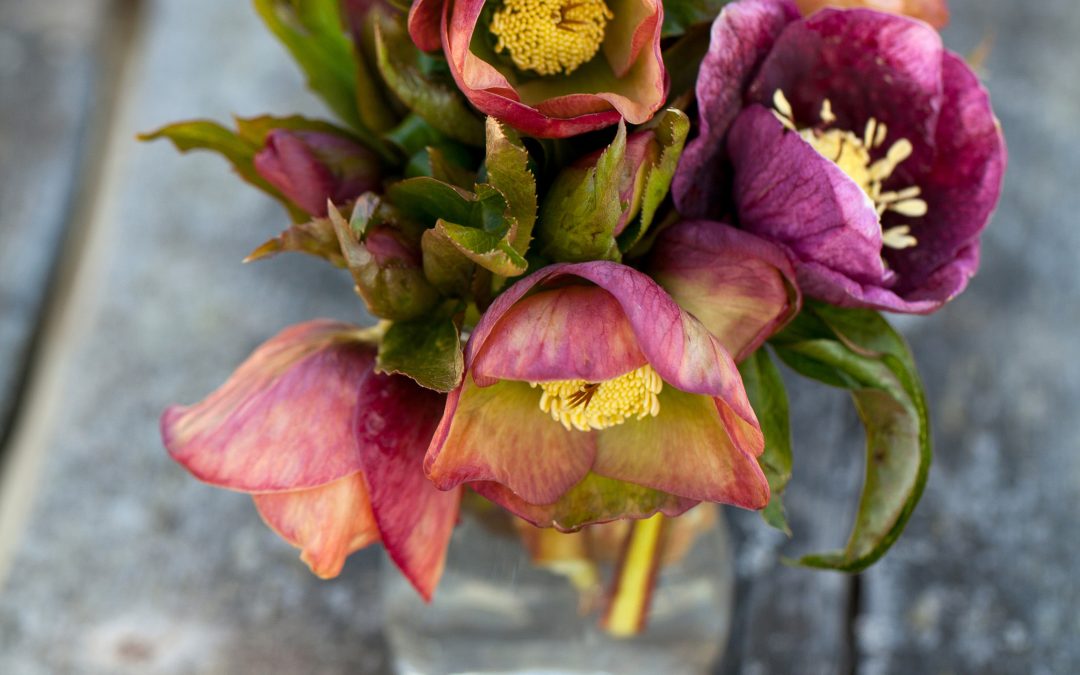
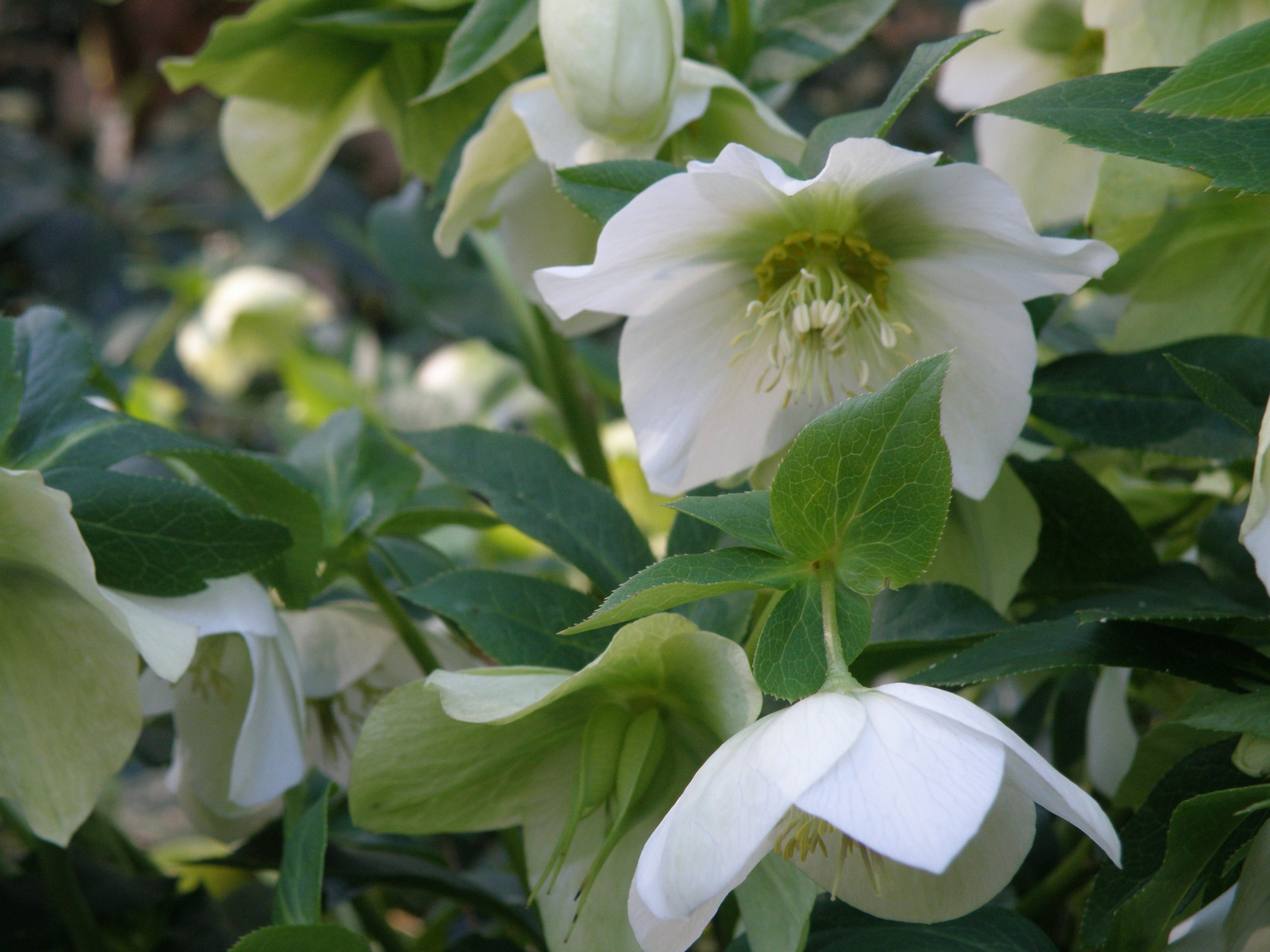
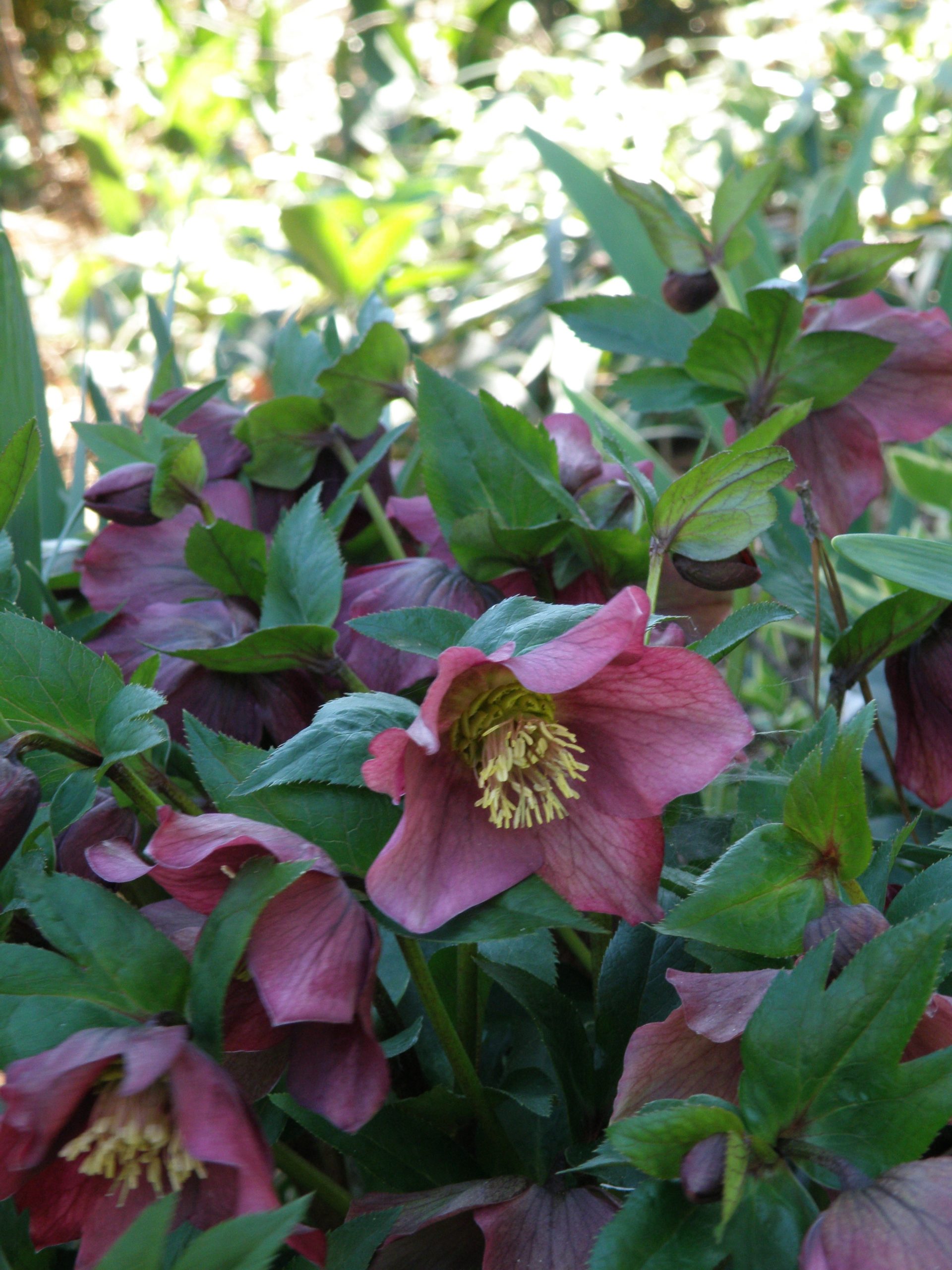
The Lenten rose (Helleborus orientalis) is really not a rose but is a shade-loving perennial. The flowers are bell-shaped and, like poinsettias, the actual flowers are bracts. These flowers modestly nod their heads beneath deep green palmate, umbrella- shaped leaves, which protect the early flowers from the cold and frost. Lenten roses are long-lived, and as the season progress-es the bashful flowers will gain confidence and stand upright on tall stems. There will be several flowers per stem, and they will persist for months. When the flowers fade, the handsome foliage, which is evergreen, can be truly appreciated.
Traditionally, the flowers of hellebores were subtle shades of pastel, but today hellebores come in a variety of colors, and hybridizers keep coming up with new hues to entice the collector. These flowers can be single, double, or star-shaped, and they can have spotting or have dark centers and anemone-like petals. The choices are endless. If you are particular about color in your landscape, it is best to purchase this plant when it is in bloom, but I do not see how anyone could be disappointed in the Lenten rose, regardless of color or shape. These plants may seem rather expensive, but they are worth the investment, and they do multiply. Eventually the garden will be blessed with a gracious plenty of Lenten roses to transplant or to share with friends.
HOW AND WHERE TO PLANT
EXPOSURE
Hellebores seem to thrive in a woodland garden setting. Beneath the canopy of deciduous trees, these plants perform best in dappled shade but will even bloom in dense shade, but there may not be as many flowers. If your trees are deciduous, the winter light should be sufficient. Aren’t gardeners always look- ing for plants that bloom in the shade and beneath the tree canopy?
SOIL & FERTILIZATION
Hellebores are not heavy feeders and do not have to be fertilized on a regular basis, but they do appreciate rich, organic and moist but well-drained soil. They prefer slightly neutral to acidic soil. An application of rich, organic mulch should be sufficient to maintain plant vigor. Hellebores will not tolerate heavy clay soil, and wet soils will induce rot, so think woodland garden when selecting a site for this plant.
PLANTING
Hellebores can be planted at any time of the year, and they can be planted as any other container-grown perennial; however, they should not be planted too deeply.
CARE & MAINTENANCE
As with all new transplants, hellebores should be watered on a regular basis, but, once established, they are drought tolerant. The best news of all regarding this lovely plant is that it is susceptible to very few pests and resistant to voles and deer, which are scourges in my garden.
CUT FLOWERS
Hellebores are wonderful cut flowers, and on a chilly day they brighten a room. They can be arranged with other early- blooming flowers or like camellias, they are lovely floating in a glass bowl.
Rosemary Verey’s book The Garden in Winter is a delightful read about English gardens on a cold winter’s day, but it is the North Carolina gardener Elizabeth Lawrence who strikes a chord with most Southern gardeners. Every winter I take Elizabeth Lawrence’s book Gardens in Winter down from the shelf and read a few passages. Caroline Dorman, a naturalist from Louisiana, did the illustrations, and her drawing of the Lenten rose adorns the dust jacket cover. These women, though long gone, are an inspiration to venture out of doors and enjoy the garden, even in the wintertime. There is always something of interest in the garden, and if you have Lenten roses, there is no excuse for having the winter doldrums. A flower that blooms on a winter day is an ecclesiastical promise of spring and worthy of our admiration.


